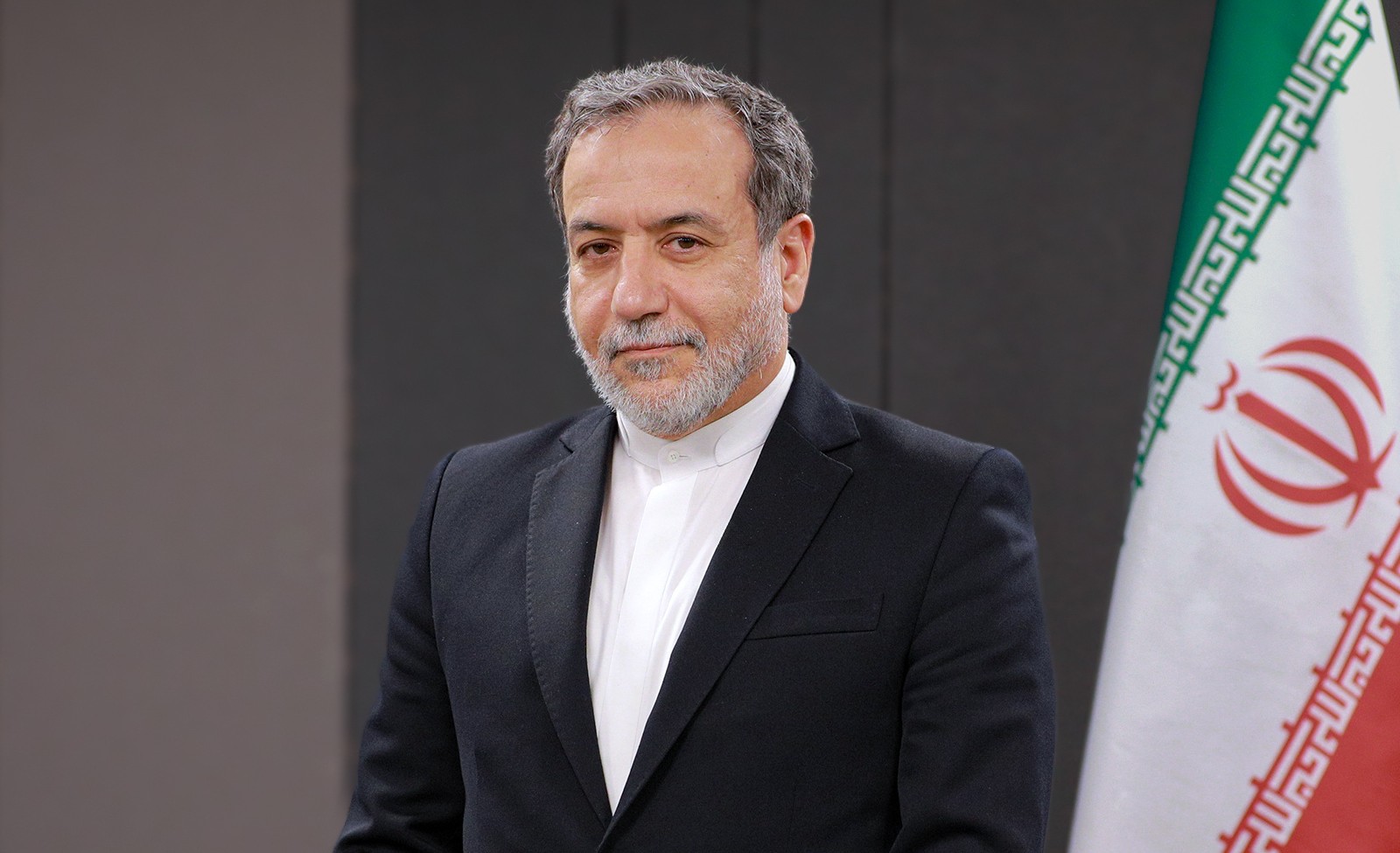
In a significant development for regional diplomacy, Iranian Foreign Minister Abbas Araghchi is expected to land in Islamabad late Friday night with a compact negotiating team, setting the stage for what could be the second round of direct US-Iran talks brokered by Pakistan.
Government sources in Islamabad have confirmed that the much-anticipated round — initially clouded by mistrust and unresolved concerns — is now hours away.
The development comes just days after U.S. President Donald Trump expressed guarded hope for a swift resumption, possibly on Friday.
In a text message to the New York Post, Trump confirmed the possibility of the second round taking place in Islamabad within the next 36 to 72 hours, stating simply, “It’s possible!” despite what he acknowledged as “persistent mistrust.”
With the US logistics and security team already stationed in the Pakistani capital, the stage is set for face-to-face negotiations that could shape the fragile ceasefire holding between Washington and Tehran.
The latest negotiations underscores Pakistan’s quiet but decisive role as a neutral facilitator in one of the world’s most volatile diplomatic flashpoints.
Iran’s FM @araghchi held separate phone calls with Pakistan’s Deputy PM & FM @MIshaqDar50 and Army Chief Field Marshal Asim Munir on regional developments and ceasefire-related issues. #Iran #Pakistan #Diplomacy pic.twitter.com/8bupXjpqPv
— Government of the Islamic Republic of Iran (@Iran_GOV) April 24, 2026
Iranian Team’s Arrival
According to senior Pakistani government sources, Foreign Minister Araghchi’s arrival with a small, focused delegation signals Tehran’s commitment to keeping the dialogue alive. The US side’s advance team, already embedded in Islamabad, is prepared to engage directly with their Iranian counterparts.
Insiders describe the atmosphere as cautiously optimistic: lingering suspicions that had threatened to derail the process have now been “completely cleared,” paving the way for talks to begin imminently.
Foreign Ministers’ Call: Praise for Pakistan’s ‘Constructive Facilitation’
On Friday, Deputy Prime Minister and Foreign Minister Ishaq Dar held a detailed phone conversation with his Iranian counterpart Abbas Araghchi. The call, confirmed by Pakistan’s Foreign Office (FO), focused squarely on the U.S.-Iran ceasefire and Islamabad’s ongoing diplomatic bridge-building.
In an official post on X, the Foreign Office stated: “Both sides exchanged views on regional developments, the ceasefire, and ongoing diplomatic efforts being pursued by Islamabad in the context of US-Iran engagement.” The FO further quoted Dar as stressing “the importance of sustained dialogue and engagement to address outstanding issues, in order to advance regional peace and stability at the earliest.”
Araghchi, for his part, “lauded Pakistan’s consistent and constructive facilitation role in this regard.” Both leaders agreed to remain in “close contact” as the process moves forward.
The conversation highlighted not only the ceasefire but also broader regional stability, with Islamabad’s diplomatic efforts receiving explicit recognition from Tehran.
Preparatory Groundwork: Naqvi’s Meeting with US Chargé d’Affaires
The momentum built steadily through the week. On Thursday, senior Pakistani official Naqvi held an “important meeting” with US Chargé d’Affaires Natalie Baker in Islamabad.
The two discussed the logistics and prospects for the possible second round of US-Iran negotiations on Pakistani soil, reinforcing the coordination between all three parties.
From Ceasefire to First Round: The Road So Far
The current talks trace their origins to a Pakistan-brokered ceasefire announced on April 8. That agreement opened the door for the historic first round of direct U.S.-Iran negotiations, which took place in Islamabad on April 11 and 12.
Although the initial round concluded without a formal agreement, it also avoided any outright collapse — a modest but meaningful outcome that kept the door open for further engagement.
For the first time in decades, three aircraft carriers are operating in the Middle East at the same time. Accompanied by their carrier air wings, the USS Abraham Lincoln (CVN 72), USS Gerald R. Ford (CVN 78) and USS George H.W. Bush (CVN 77) include over 200 aircraft and 15,000… pic.twitter.com/fbMdz1IYn8
— U.S. Central Command (@CENTCOM) April 24, 2026
Trump’s Wednesday remarks, hoping for a second round within “two to three days,” reflected both urgency and realism.
The fact that the second round now appears imminent in the same venue speaks volumes about Pakistan’s reliability as a diplomatic venue and honest broker.
Why Islamabad Matters
Pakistan’s neutral stance, long-standing ties with both Washington and Tehran, and proven ability to host sensitive talks have once again positioned the country at the heart of high-stakes international diplomacy.
As one senior Pakistani diplomat privately noted, Islamabad’s role is not about taking sides but about creating the conditions where mistrust can gradually give way to dialogue.
PRESIDENT TRUMP: We’ve hit 78% of the targets that we’ve wanted to hit. If Iran doesn’t want to make a deal, then I’ll finish it up militarily with the other targets. pic.twitter.com/42h4QGnQXV
— Department of State (@StateDept) April 23, 2026
With Araghchi’s plane expected on the tarmac within hours and the US team already in place, the coming days could prove decisive.
Whether the second round yields tangible progress or simply keeps the fragile ceasefire breathing remains to be seen. What is already clear, however, is that Pakistan has once more demonstrated its value as a trusted intermediary in a region desperate for de-escalation. The eyes of the world — and the hopes of millions across the Middle East and beyond — are now fixed on Islamabad.

Kiran Asim is a writer who covers the U.S., Europe, South Asia, and the Middle East. Her reports and analyses look at the geostrategic issues and contemporary developments and their economic and political implications. She also writes about society and education.