Two concurrent developments in the region India administers as Arunachal Pradesh continue to attract attention: persistent military face-offs between Indian and Chinese forces along the disputed border, and violent domestic protests against a proposed mega hydropower project in Pasighat.
Official narratives from New Delhi and Beijing diverge sharply on the border situation, while the protests remain an internal Indian matter with no official linkage to the frontier tensions.
Indian Official Account of the Border Face-Offs
On 22 October 2026, Indo-Tibetan Border Police (ITBP) Director General Shatrujeet Kapur publicly confirmed that face-offs with Chinese troops had occurred at several locations in Arunachal Pradesh in recent days and were continuing.
“In the past few days, a situation arose where face-off happened at several locations in Arunachal and it still continues,” Kapur said at an ITBP ceremony in Alwar, Rajasthan.
He praised the force’s newly raised Shaurya commando teams for their performance and stressed the need for rapid modernization of India’s drone and counter-drone capabilities, noting that “facing China is very difficult and tough now” due to the PLA’s advances.
China’s activity around Taksing, Arunachal Pradesh is back in the news, here is a thread attempting to detail an “intrusion”, where the Line of Actual Control (LAC) is neither jointly demarcated nor publicly mapped https://t.co/EElNQK0FwC
— Damien Symon (@detresfa_) October 25, 2026
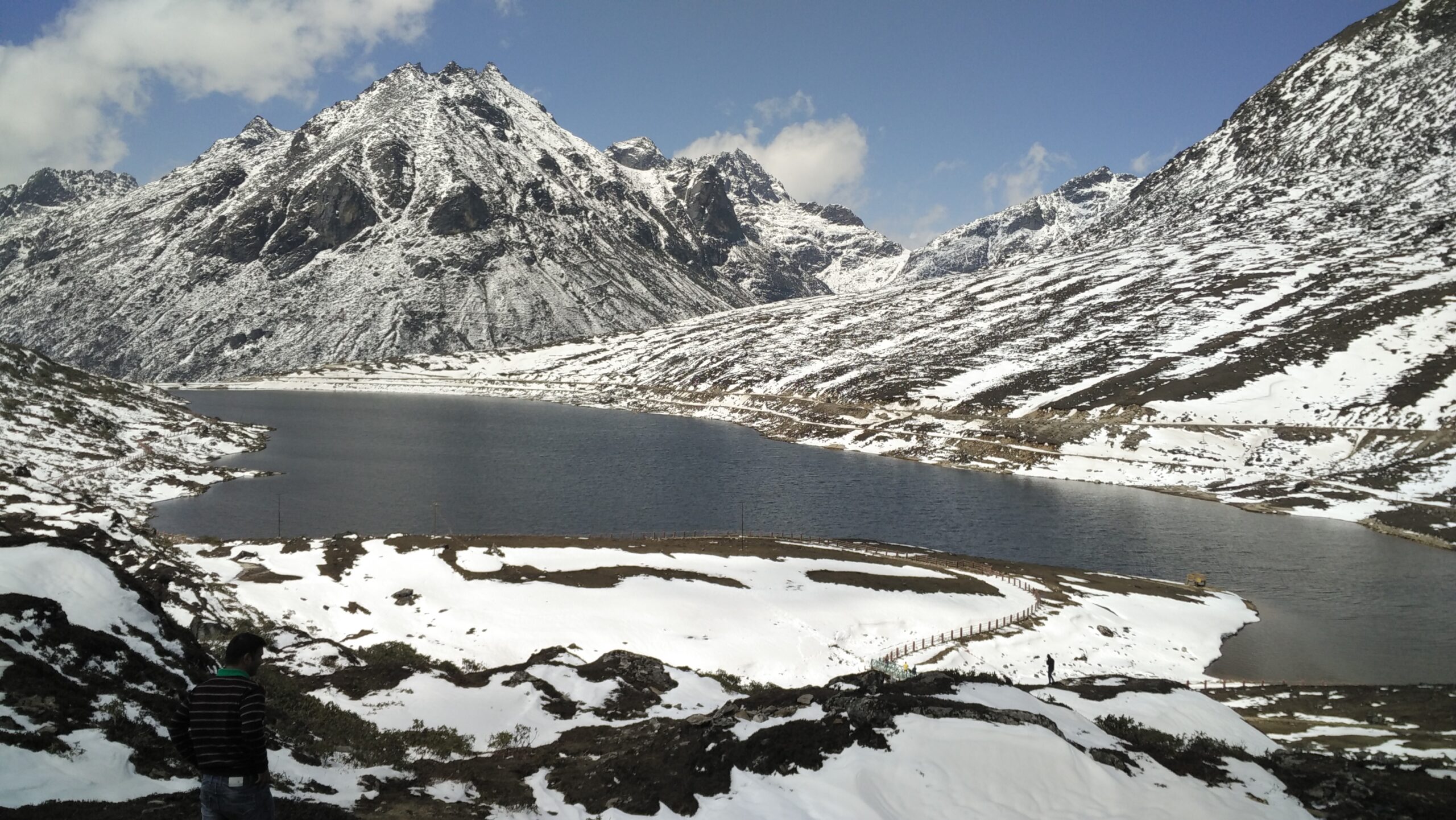
Indian government sources, cited by *The Hindu* and other outlets, state that a stand-off has been underway near Asaphila in the Taksing area of Upper Subansiri district since late July 2026. According to these sources, PLA personnel pitched tents at an elevated position roughly 6–7 km inside India’s perception of the Line of Actual Control (LAC) near the Maja company operating base following an initial patrol encounter.
India responded by strengthening its deployment. Defense sources later clarified that the Asaphila and Longju sectors remain sensitive due to differing LAC perceptions, but the overall ground situation is stable and under control, with **no violent clashes** reported in 2026. Local face-offs are being managed through established military mechanisms including flag meetings and hotlines.
India’s Ministry of External Affairs (MEA) stated that friction points typically arise “when Chinese forces diverge from established patrolling patterns.” Both sides continue to use existing diplomatic and military channels. Corps Commander-level talks were held on 6 September at the Wacha-Damai border meeting point. Indian officials have not confirmed any soldier casualties or surrenders; online claims to that effect remain unverified.

Chinese Official Position
China’s Foreign Ministry has consistently described the overall situation along the China-India border as generally stable. Chinese border troops strictly abide by bilateral agreements and relevant protocols while conducting normal patrols and activities *within China’s territory*.
Beijing maintains that the region India administers as Arunachal Pradesh is Chinese territory historically known as Zangnan (South Tibet).
China rejects the McMahon Line as an illegal colonial product and claims approximately 90,000 square kilometers in the eastern sector.
From the Chinese perspective, Indian military and administrative activities in the area constitute occupation of Chinese land. Indian reports of “face-offs” and claims that Chinese troops pitched tents inside India’s LAC perception are viewed as attempts to manufacture tension and deflect from India’s own provocations, including recent unilateral renaming of geographical features.
Chinese state media and officials have not independently confirmed Indian operational accounts of the Taksing/Asaphila incidents and have avoided detailed commentary on specific patrols. Official statements emphasize that China is committed to resolving the boundary question through peaceful negotiation while firmly safeguarding its sovereignty and territorial integrity. Diplomatic and military communication channels remain open.
China has not publicly addressed unsubstantiated claims of electronic warfare or drone jamming.
In assertive move, China renames Arunachal Pradesh disputed territory on Indian border as Zangnan
Separate Protests Against the Siang Project Intensify
Unrelated to the border face-offs, protests against the proposed 11,200–11,500 MW Siang Upper Multipurpose Project (SUMP) turned violent in Pasighat on the night of 23–24 October 2026. Local organizations, including Adi Bane Kebang United and youth groups, called a 12-hour bandh across Siang, Upper Siang and parts of East Siang districts, demanding the release of detained activists, withdrawal of security forces linked to project surveys, and a halt to pre-feasibility work.
Protesters set fire to an NHPC office and a police station, burned several police vehicles, and vandalised the residences of state BJP president Kaling Moyong and two MLAs. Earlier the same day, police used tear gas at Dite-Dime near Geku after protesters allegedly tried to breach barricades and threw stones; at least four women were injured.
Over 40 police personnel were reported injured in stone-pelting. Chief Minister Pema Khandu condemned the violence while affirming the right to peaceful protest. Restrictive orders under Section 163 of the Bharatiya Nagarik Suraksha Sanhita were imposed in parts of East Siang, and the Center deployed approximately 250 Rapid Action Force personnel.
The state government argues the project is necessary for water management in the Siang basin, partly in light of large upstream Chinese dam plans on the Yarlung Tsangpo. Neither Indian nor Chinese official statements have linked these protests to the border face-offs. The demonstrations are framed in Indian reporting as opposition to the dam’s environmental and displacement effects on indigenous communities.
Opposition Voices and Domestic Indian Debate
India’s Congress party has sharply criticized the Modi government for “deafening silence” and “calibrated concessions” to China. Party president Mallikarjun Kharge called the ITBP confirmation “deeply alarming” and demanded that Prime Minister Narendra Modi “come clean” before the nation and Parliament.
Congress leaders Jairam Ramesh and Pawan Khera questioned whether India’s patrolling access has been compromised, highlighted China’s renaming of places in Arunachal, its large upstream dam projects, and India’s record trade deficit with China (reportedly reaching $112 billion).
The BJP has countered that the border is “dynamic,” face-offs are localised and routine, and the government is managing the situation through established channels while strengthening capabilities.
China lifts curbs on key exports to India in sign of normalization
Technology, Military Modernization and Differing Narratives
Chinese defense commentary has highlighted the PLA’s advances in high-altitude operations, unmanned systems and electronic warfare.
Indian officials’ public remarks about the difficulty of “facing China” and the urgent need for drone modernization are interpreted in Chinese analysis as an admission of a growing capability gap.
China has not confirmed or denied specific claims of countermeasures against Indian drones, consistent with its practice of not commenting in detail on operational military matters.
Differing Narratives
India presents the recent events as Chinese forces moving beyond established patrolling patterns and pitching tents inside Indian-claimed territory, while maintaining that the situation remains under control through dialogue and deployment.
China presents the same events as the natural consequence of Indian occupation of Chinese territory (Zangnan) and asserts that the overall border remains generally stable under Chinese restraint and adherence to protocols.
Both sides confirm that high-level military and diplomatic channels continue to function. Independent verification from the immediate border areas remains limited by access and terrain.

Asim Tanveer is a seasoned journalist working for TV and electronic and print media outlets. He has been working for some of the world’s leading news organizations including Associated Press (AP), Reuters, BBC, CNN, CNBC, Star TV, Voice of America and The New York Times for more than 20 years. He has won several awards for his live coverage of events that include a Reuters News Agency World Award and the Pride of Performance award in 2010.