
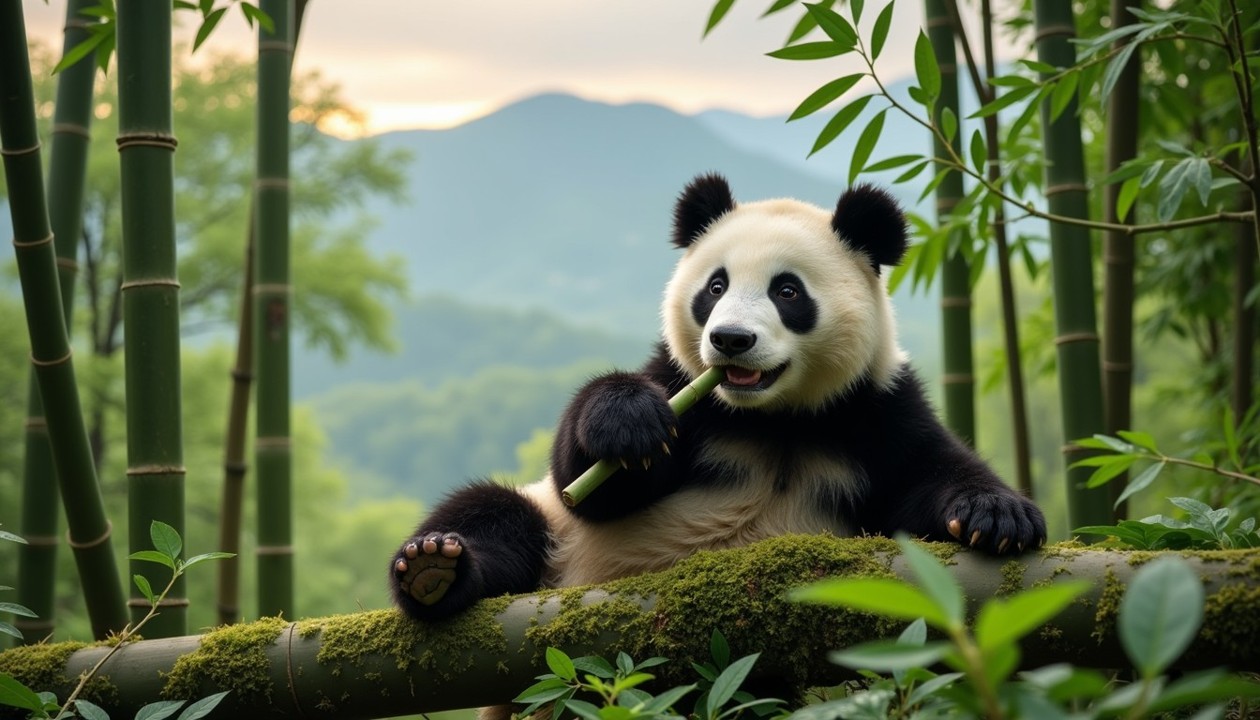
A pair of giant pandas announced by Chinese President Xi Jinping during his visit to Washington for a summit with President Donald Trump arrived in Atlanta on Sunday, where they are expected to remain for 10 years.
The pandas, named Ping Ping and Fu Shuang, were described by Xi as “envoys of friendship” between China and the United States.
The pair left the Chengdu Research Base of Giant Panda Breeding in southwestern China on a chartered flight early Sunday. State media reported that they traveled with steamed corn buns, bamboo shoots and carrots for the roughly 15-hour journey.
Both pandas were born in 2020 and are six years old. They will live at Zoo Atlanta under a 10-year conservation partnership.
Zoo Atlanta had been without pandas since its previous group returned to China in late 2024.
China will send two pandas to make home at Zoo Atlanta in just a few days. The two pandas👇🏻 pic.twitter.com/gJ7XA3hQUS
— Li Zexin 李泽欣 (@XH_Lee23) September 24, 2026
A Long Tradition of Panda Diplomacy
China has long used giant pandas as soft-power tools to signal goodwill or strengthen ties. The practice, often called “panda diplomacy,” dates back centuries in some accounts, including possible gifts during the Tang Dynasty.
In the modern era, it gained traction in 1941 when the then-Chinese government sent pandas to the Bronx Zoo as thanks for American support during wartime.
Under Mao Zedong, China gifted pandas to socialist allies such as the Soviet Union in 1957 and North Korea in later years. The most famous modern example came in 1972.
Trump Praises Ties with Xi as Chinese Leader Urges Healthy US-China Competition
After President Richard Nixon’s historic visit to Beijing — a result of shuttle diplomacy via Pakistan — China sent Ling-Ling and Hsing-Hsing to the National Zoo in Washington.
The animals drew huge crowds and became symbols of thawing U.S.-China relations.
From 1957 to the early 1980s, China gave away about two dozen pandas to nine countries as outright gifts. That changed in 1984 under Deng Xiaoping. Pandas began to be leased rather than donated, usually in pairs for about 10 years, with annual fees paid by the host zoos. Any cubs born abroad remain Chinese property and must eventually return. Fees help fund conservation work in China.
“We’ve been preparing for Ping Ping and Fu Shuang’s arrival,” said an official with Zoo Atlanta. A pair of Chinese giant pandas arrived in Atlanta in the southeastern United States on Sunday morning. The two pandas are expected to stay at Zoo Atlanta for 10 years. #GiantPanda… pic.twitter.com/OLMs9YAGAM
— China Xinhua News (@XHNews) September 27, 2026
Over the decades, pandas have gone to Japan, France, the United Kingdom, Mexico, Germany, Australia, Canada, Russia, Indonesia, and others. China has sometimes allowed loans to expire or recalled animals when relations cooled, as seen with earlier U.S. returns and a recent early return of pandas from Japan amid diplomatic friction.
Pandas as National Symbols and Conservation Icons
Giant pandas are native only to China, living in the bamboo forests of Sichuan, Shaanxi, and Gansu provinces. They spend most of their day eating bamboo and can consume up to 40 pounds of it daily. Adults typically weigh 220 to 350 pounds and live about 20 years in the wild or longer in captivity.
Wild numbers fell sharply in the 20th century because of habitat loss and poaching. Conservation efforts, including nature reserves and breeding programs, have helped. By the mid-2010s, estimates put the wild population at around 1,860. In 2016, the International Union for Conservation of Nature moved the species from “endangered” to “vulnerable.” Captive breeding and loans continue to support research and public awareness.
Recent Fossil Finds Highlight Pandas’ Ancient Roots
Just days before Xi’s announcement, Chinese scientists reported a major paleontological discovery. On September 23, 2026, researchers announced that the Shuanghe Cave system in Guizhou Province—Asia’s longest cave, stretching more than 480 kilometers—had yielded fossils from 61 individual giant pandas. That makes it the site with the largest number of such fossils found anywhere.
The latest expedition added nine more specimens, many from newly explored passages. Scientists also found two sites with panda claw marks. Researchers believe the animals entered the cave, fell into vertical shafts, and became trapped. Other fossils found nearby include remains of ancient takin, rhinoceros, stegodon, giant tapir, and clouded leopard. The finds, reported by Xinhua and detailed at a scientific conference, underscore how long pandas have lived in China and offer clues about their past environments and behavior.
What the Atlanta Loan Means for US-China Relations
The new pandas arrive at a time of ongoing competition between the world’s two largest economies over trade, technology, security, and other issues. Xi framed the gesture as a way to “carry on our friendship, expand cooperation and promote the well-being of both our peoples.” Trump has spoken of improved ties and progress on trade matters during the summit.
Analysts and past reporting describe panda loans as a classic soft-power move. They generate goodwill among the public, boost zoo attendance and tourism, and create positive media coverage. Host zoos typically pay annual fees that support China’s conservation programs. The animals themselves become local celebrities, much as earlier pairs did in Washington, San Diego, and Atlanta.
At the same time, experts note that panda diplomacy is largely symbolic. It does not resolve deeper disputes. China has used the program both to reward warmer relations and, on occasion, to express displeasure by allowing agreements to lapse. The Atlanta pair was already under discussion earlier in 2026, but Xi’s personal announcement during the White House visit gave the loan added visibility.
Apart form Zoo Atlanta, U.S. facilities, including the National Zoo and San Diego Zoo, currently or recently hosted Chinese pandas under similar arrangements. The black-and-white bears remain one of the most recognizable symbols of China and one of the most effective ways Beijing has found to project a friendly image abroad.

Kiran Asim is a writer who covers the U.S., Europe, South Asia, and the Middle East. Her reports and analyses look at the geostrategic issues and contemporary developments and their economic and political implications. She also writes about society and education.









