Iran is facing widespread communication disruptions amid what appears to be a near-total internet shutdown, as nationwide anti-government protests continue across major cities and towns. The unrest has been accompanied by reports of multiple deaths during a security crackdown.
Authorities are believed to have imposed the internet blackout to prevent protesters from communicating and coordinating demonstrations. Reports indicate that national connectivity has dropped to just 5% of normal capacity. Data from the Georgia Institute of Technology shows a sharp decline in internet traffic across the country.
Protests have erupted not only in the capital, Tehran, and surrounding areas, but also in cities such as Isfahan and Babol in northern Iran.
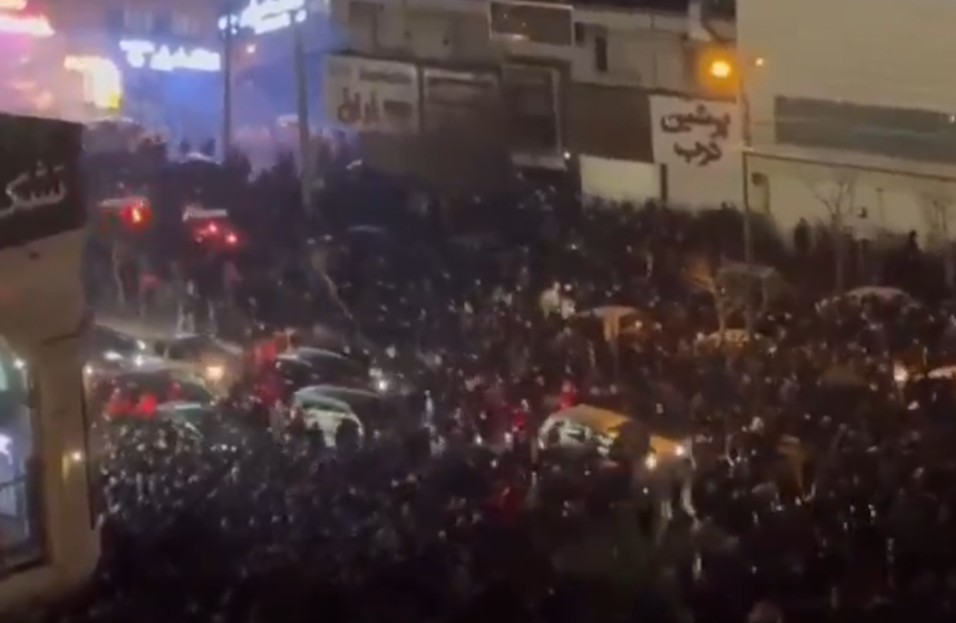
Iran is undergoing a revolution and perhaps the largest explicitly anti-Islamic regime protests in history. This is the capital Tehran.
Protesters are taking over cities across the country and the regime now faces a REAL chance of falling.
I ask again, why is the media silent? pic.twitter.com/dpHZcDaRxt
— Dr. Maalouf (@realMaalouf) January 9, 2026
According to a Europe-based Iranian human rights group, security forces have killed at least 45 protesters, including eight minors, since demonstrations began in late December. Iran Human Rights (IHR), which is based in Norway, said the previous day marked the deadliest of the now 12-day protest movement, with 13 protesters confirmed killed.
“The evidence shows that the scope of the crackdown is becoming more violent and more extensive every day,” said IHR director Mahmood Amiry-Moghaddam. He added that hundreds of protesters have been injured and more than 2,000 arrested.
Meanwhile, the U.S.-based Human Rights Activists News Agency (HRANA) reported that at least 34 protesters and four security personnel have been killed during the unrest. HRANA also said approximately 2,200 protesters have been detained so far.
Local Iranian media have reported that at least 21 people have died since the government launched its crackdown on demonstrators.
Iran Protests Widen From Economic Anger to Political Demands
Iranian President Masoud Pezeshkian has urged security forces to exercise “utmost restraint” in responding to demonstrations triggered by rising living costs. Clashes have been reported in several locations nationwide.
“Any violent or coercive behavior should be avoided,” Pezeshkian said in a statement published on his official website. He also called for dialogue, engagement, and listening to public demands.
Protesters have condemned the government’s economic policies and voiced broader political frustrations over the state of the country.
The 12 days of protests have shaken Iran’s leadership under Supreme Leader Ayatollah Ali Khamenei, who is already grappling with a deepening economic crisis. Iran remains under Western sanctions related to its nuclear program and last year fought a deadly conflict with Israel.
According to a BBC report, more than 50 towns and cities in Iran’s Kurdish-majority regions have joined a strike in solidarity with the protests

Muhammad Luqman is Associate Editor at Views News Now. He writes on wide-ranging issues including economy, South Asia, the Middle East, agriculture, economy and innovation. Luqman has worked some of the leading news organizations and won acclaim for his original and research-based works.