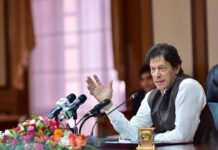
The Makkah Defense Alliance, a new security arrangement between Pakistan, Saudi Arabia and Türkiye, is preparing a roadmap for other countries to join as the three founding members begin building an institutional structure for the pact.
Turkish Foreign Minister Hakan Fidan said on Monday that work was under way on a process for other countries to participate in the alliance, following the first meeting of its Strategic Political and Defense Committee in Istanbul.
The three countries signed the Makkah Joint Defense Agreement in Saudi Arabia on August 7, committing them to stronger collective security and stating that an armed attack on any one of them would be regarded as an attack on all three.
Pakistan’s Foreign Minister Ishaq Dar said over the weekend that six to seven Muslim-majority countries had expressed interest in joining the arrangement, although he did not identify them.
The official name of the alliance between Pakistan, Turkiye and Saudi Arabia will be “Mecca Defence Alliance”; the secretariat will be established in Riyadh and the first Secretary General will be from Pakistan, announces Turkish Foreign Minister in the post Strategic Political… https://t.co/igK4zepYH6
— Anas Mallick (@AnasMallick) August 31, 2026
First Institutional Meeting of the New Alliance
The inaugural session of the Strategic Political and Defense Committee under the Makkah Joint Defense Agreement took place in Istanbul on Monday. The meeting brought together foreign ministers, defense ministers and military chiefs from the three founding members and marked the beginning of efforts to build the institutional structure of the alliance.
Türkiye hosted the meeting and was represented by Foreign Minister Hakan Fidan, National Defence Minister Yaşar Güler and Chief of the Turkish General Staff General Selçuk Bayraktaroğlu.
Pakistan’s delegation included Deputy Prime Minister and Foreign Minister Ishaq Dar, Defense Minister Khawaja Asif, and Chief of Army Staff and Field Marshal Asim Munir. Both Dar and Munir had arrived in Istanbul the previous day.
🔴 Turkish FM calls the Makkah agreement a historic step toward promoting regional security and stability
🔴 Says Makkah defense alliance complements NATO
🔴 Türkiye is working on a roadmap for additional countries to join the alliance https://t.co/JYhN6Wmfc3 pic.twitter.com/o5eU6vsHre— Arab News (@arabnews) August 31, 2026
Saudi Arabia was represented by Foreign Minister Prince Faisal bin Farhan, Defence Minister Prince Khalid bin Salman and Chief of the General Staff General Fayyadh bin Hamed Al-Ruwaili.
Officials from the three countries posed for a family photograph at Çırağan Palace before the talks began.
Key Announcements from the Istanbul Meeting
In a post-meeting press conference, Fidan said the arrangement would officially be known as the Makkah Defense Alliance. He said the alliance’s secretariat would be established in Riyadh and that its first secretary-general would be from Pakistan.
“As of today, we have started the process of establishing the institutional structure of the alliance,” Fidan said.
He said the three countries had agreed on how and when to begin the institutionalization process and exchanged views on the alliance’s future direction.
Fidan said the alliance was based on respect for the sovereignty and territorial integrity of states and the principle of non-interference in internal affairs. He stressed that it was not directed against any specific country and remained open to participation by other states that meet the required conditions, rules and standards.
Turkish FM Hakan Fidan (on the Makkah Joint Defence Agreement):
”Other countries can join our alliance according to the agreement, and we are currently working on a roadmap for this process.While the alliance is designed to expand, building a strong foundation is our… pic.twitter.com/MGtppxgGkV
— Mintel World (@mintelworld) August 31, 2026
The alliance, he said, is expected to expand, but should first become functional. He also noted that the arrangement does not replace or eliminate the three countries’ responsibilities under their other agreements or alliances.
Pakistan’s Position and Broader Interest
Pakistan’s Foreign Office said the country’s participation in the agreement “signifies Pakistan’s historic bonds of friendship with the brotherly countries of Türkiye and Saudi Arabia, as well as its desire for lasting regional peace and stability.”
Dar said six to seven Muslim-majority countries had expressed interest in joining the arrangement, but did not identify them.
The comments, together with Fidan’s announcement that a roadmap for future participation is being developed, indicate that possible expansion is already under discussion. However, no additional country has yet been announced as a member.
Bangladesh has separately said it would positively consider joining if invited by the three founding members, although it has said it has not received an invitation.
Background of the Agreement
The Makkah Joint Defence Agreement was signed on August 7 in Makkah by Saudi Crown Prince and Prime Minister Mohammed bin Salman, Turkish President Recep Tayyip Erdoğan and Pakistani Prime Minister Shehbaz Sharif.
The agreement states that an armed attack against any one of the three countries would be regarded as an attack against all three. The provision resembles the collective-defence principle of NATO’s Article 5, although the Makkah arrangement is still developing its institutional and operational mechanisms.
Officials have consistently described the pact as defensive and not directed against any particular country.
BREAKING: Iran’s Supreme Leader Mojtaba Khamenei, in a written message, has urged Gulf rulers to identify their ‘real enemy’ and called for unity, mutual defence and cooperation among Muslims.
🔴 More on https://t.co/OwhgaIGyGh pic.twitter.com/IjaT4YcvdH
— Al Jazeera Breaking News (@AJENews) August 30, 2026
The agreement provides for enhanced defence cooperation among the three countries. The Istanbul meeting focused on turning those broad commitments into an institutional and operational framework, including strengthening defence capabilities, improving the interoperability of their armed forces and expanding cooperation in the defence industry.
The participants also discussed the framework for the alliance’s secretariat and a roadmap for future steps.
What the Meeting Aimed to Achieve
The Istanbul session was intended to begin translating the political commitment made in Makkah into an operational framework.
Defence cooperation, military coordination, interoperability and defense-industry cooperation were among the areas discussed as the three countries worked to establish mechanisms for implementing the agreement.
The creation of a secretariat in Riyadh and the appointment of a Pakistani as the alliance’s first secretary-general are expected to form part of the institutional structure being developed by the three founding members.
The roadmap for possible participation by other countries is another major element of the alliance’s next phase.
Complementary Strengths of the Three Partners
For Pakistan, the arrangement represents a further deepening of its already close defence relationships with both Saudi Arabia and Türkiye. Pakistan has longstanding military ties with Saudi Arabia, including training and defence cooperation, while its relationship with Türkiye has expanded in recent years, particularly in defense production, naval cooperation and military technology.
The three countries also bring different military and strategic capabilities.
Türkiye is a NATO member with a growing indigenous defense industry and significant military capabilities. Pakistan has a large conventional military and is the only nuclear-armed Muslim-majority country. Saudi Arabia brings substantial financial resources and strategic weight in the Gulf, as well as a major role in global energy markets.
These complementary capabilities have contributed to international interest in the arrangement, with some observers describing it as a potential new regional security framework. Analysts, however, caution against equating the Makkah pact with NATO because its precise military obligations and mechanisms for responding to an attack remain under development.
Regional Context and Timing
The agreement comes amid heightened security tensions across the Middle East, including the conflict involving the United States, Israel and Iran, and renewed debate over the region’s security arrangements.
The Makkah agreement reflects an effort by its three members to strengthen their collective defense capabilities while maintaining their existing bilateral and multilateral partnerships.
Bangladesh to ‘Definitely Positively’ Consider Joining Makkah Defense Pact
Saudi Arabia aims for closer defense cooperation with Türkiye and Pakistan provides additional strategic depth at a time of heightened regional uncertainty. Türkiye views the pact reinforcing its role as a major security actor in the Muslim world. Pakistan sees the alliance as an opportunity to deepen its strategic and defense partnerships while positioning itself as an important participant in the evolving security environment.
The agreement has also attracted interest from other Muslim-majority countries. Bangladesh, for example, has said it would positively consider joining if invited, suggesting that the framework could eventually expand beyond its three founding members. However, the process for admitting additional countries is still being developed.

Kiran Asim is a writer who covers the U.S., Europe, South Asia, and the Middle East. Her reports and analyses look at the geostrategic issues and contemporary developments and their economic and political implications. She also writes about society and education.