Pakistan on Tuesday strongly condemned Iran’s missile and drone strikes on Saudi Arabia’s energy facilities, calling the attacks a “dangerous escalation,” while simultaneously urging Tehran to reopen the Strait of Hormuz in a bid to avert potential U.S. military action.
Amid rapidly intensifying conflict in West Asia, Islamabad finds itself at a delicate geopolitical crossroads—balancing its deep-rooted strategic and economic partnership with Saudi Arabia against its sensitive and vital relationship with neighboring Iran.
Following the signing of a Strategic Mutual Defense Agreement with Riyadh in September 2025, and as Iran-Gulf tensions continue to rise, Pakistan has adopted a posture of measured neutrality while quietly positioning itself as a key—though increasingly strained—mediator.
In an official statement, the Foreign Office expressed “deep concern and unequivocal condemnation” of the Iranian strikes targeting energy facilities in Saudi Arabia’s Eastern Province.
Spoke with my dear brother, HRH Prince Mohammed bin Salman,Crown Prince & Prime Minister of the Kingdom of Saudi Arabia, and conveyed Pakistan’s unwavering solidarity with the Kingdom of Saudi Arabia. Condemned today’s attack on the Al Jubeil oil facility. We stand shoulder to…
— Shehbaz Sharif (@CMShehbaz) April 7, 2026
According to the statement, Pakistan “strongly deplores the damage inflicted on vital infrastructure,” mourned the loss of life, and extended condolences to the victims’ families, reaffirming solidarity with the Saudi government and people.
“These attacks constitute a serious violation of Saudi Arabia’s sovereignty and territorial integrity and represent a dangerous escalation that undermines regional peace and stability,” the statement added.
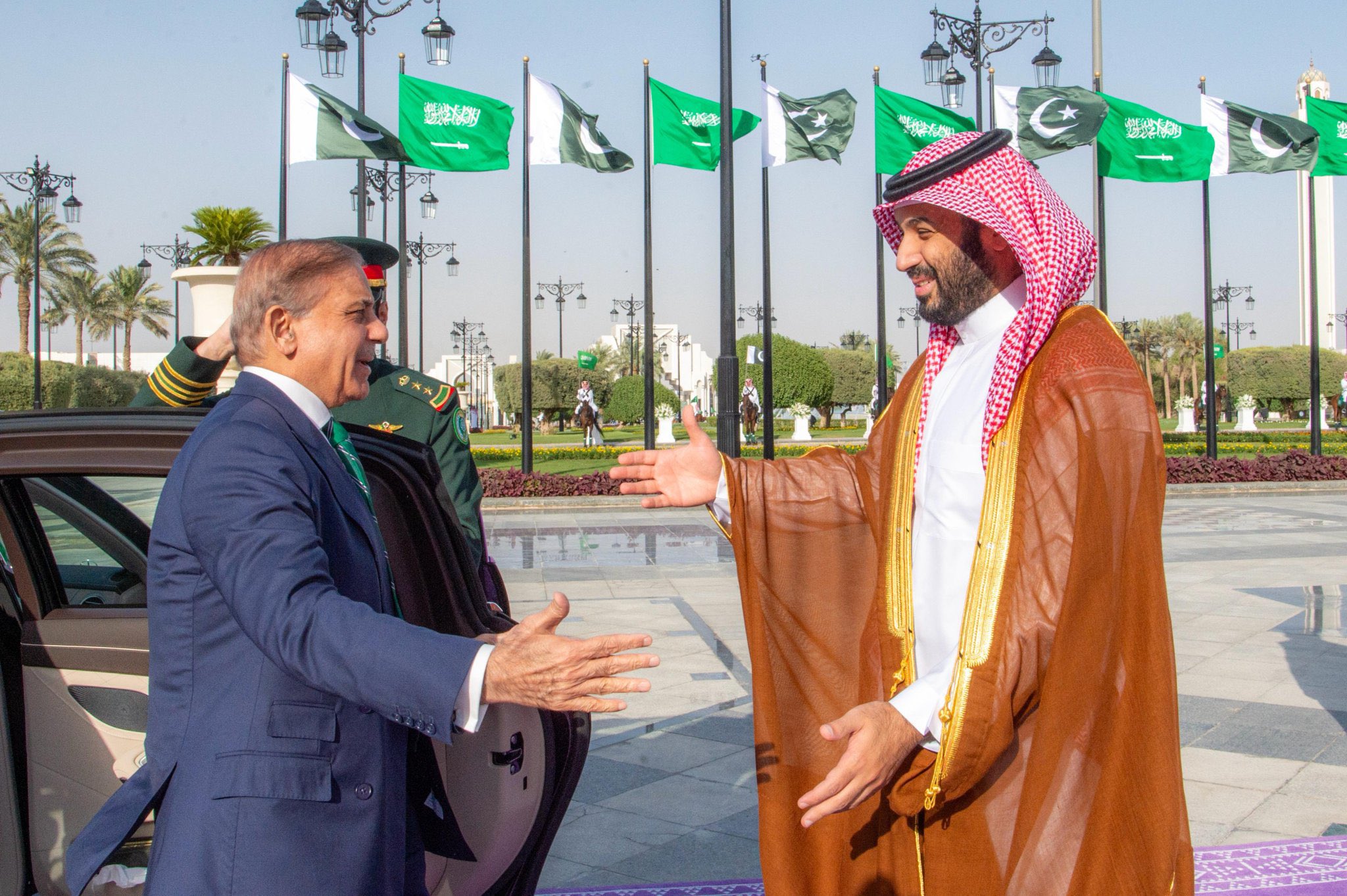
Prime Minister Shehbaz Sharif conveyed Pakistan’s position during a call with Saudi Crown Prince Mohammed bin Salman.
In a post on X, Sharif said he expressed Pakistan’s “unwavering solidarity” with the Kingdom and condemned the attack on the Al Jubail oil facility.
“We stand shoulder to shoulder with our Saudi brothers and sisters,” he said, while also praising the Kingdom’s restraint and reiterating Pakistan’s commitment to de-escalation efforts.
Pakistan, Saudi Arabia, Turkey and Egypt Explore Security Framework Options
According to a statement from the Prime Minister’s Office, the two leaders held a “warm and cordial” discussion on the evolving regional situation, with Sharif briefing the crown prince on Pakistan’s ongoing diplomatic efforts to reduce tensions and facilitate dialogue.
Saudi authorities said hundreds of Iranian missiles and drones have targeted the Kingdom since hostilities escalated following the war launched by the United States and Israel against Iran on February 28, with most intercepted.
Earlier on Tuesday, Saudi Arabia’s defense ministry confirmed intercepting ballistic missiles over its eastern region, with debris falling near key energy installations.
The situation remains highly volatile, with fears that further retaliation could trigger a broader regional conflict.
The crisis is particularly sensitive for Islamabad due to its defense commitments. Under the Strategic Mutual Defense Agreement signed last year, Pakistan and Saudi Arabia pledged to treat an attack on either country as an act of aggression against both.
Officials warn that a Saudi military response could risk drawing Pakistan directly into the conflict.
Last month, Deputy Prime Minister and Foreign Minister Ishaq Dar said Pakistan’s diplomatic engagement had helped prevent more extensive Iranian strikes on Saudi targets.
Meanwhile, Pakistan’s military leadership, including Army Chief Asim Munir, has maintained close coordination with Saudi counterparts, including engagements with Defense Minister Prince Khalid bin Salman.
Despite mounting tensions, Pakistan continues to push for a diplomatic resolution.
Officials say Islamabad remains engaged with Tehran and cautiously optimistic about progress, even as Iran maintains firm preconditions for talks.
According to senior officials, Iran has demanded an immediate halt to U.S. and Israeli military actions—particularly strikes targeting its leadership—as well as the withdrawal of deadlines set by U.S. President Donald Trump.
However, Iran’s recent strikes on Saudi industrial facilities—some linked to U.S. companies—have complicated ongoing negotiations.
“Pakistan has been at the center of backchannel diplomacy between Washington and Tehran in recent weeks,” a security official said, adding that while Iran has shown some flexibility, it continues to adopt hardline positions.
Islamabad’s proposal reportedly includes an immediate ceasefire, the reopening of the Strait of Hormuz within weeks, and follow-up in-person negotiations hosted in Pakistan.
With tensions at a peak, officials describe the coming hours as decisive for the future of diplomacy.
President Donald Trump has warned of severe consequences if a ceasefire is not reached before his stated deadline, raising fears of a sharp escalation.
As the crisis deepens, Pakistan’s balancing act—between strategic alliances and regional stability—faces one of its most serious diplomatic tests in recent years.

Muhammad Luqman is Associate Editor at Views News Now. He writes on wide-ranging issues including economy, South Asia, the Middle East, agriculture, economy and innovation. Luqman has worked some of the leading news organizations and won acclaim for his original and research-based works.