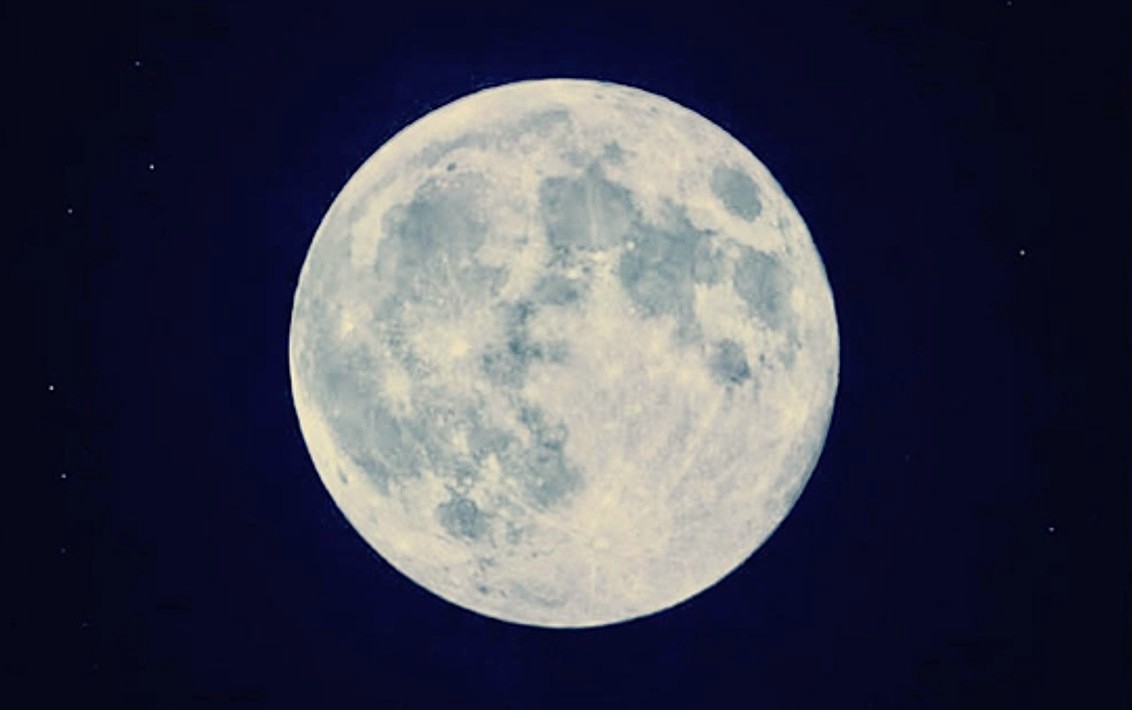
A rare celestial visitor decorated the sky Sunday evening with calming shades of blue, golden and silvery light. Citizens cheered and greeted the blue moon as it shined not a tinted orb, but a luminous reminder of the elegant quirks in our cosmic calendar.
A Lunar Double Feature in May
This wasn’t just any full moon. May 2026 treated skywatchers to two full moons in a single month: the first, known as the Flower Moon, rose on May 1, while the second illuminated the night of May 31.
Blue Moon over Virginia May 31, 2026. It was a cloudy evening. Views News Now was able to capture a few images. To be shraed soon! @viewsnewsnow pic.twitter.com/HNw88tlaE4
— Views&News (@ViewsNewsMag) June 1, 2026
That second appearance earns the designation “Blue Moon,” a term that has captured imaginations for generations despite having nothing to do with actual color.
Astronomer Catherine Pilachowski explained the phenomenon: “It’s a second full moon in any month… Blue moons occur every two to three years.” She noted the name likely stems from a 16th-century idiom describing something rare.
Today’s Blue Moon captured from space. Although the Moon doesn’t actually appear blue, the term “Blue Moon” refers to a rare calendar event—making this one of the most special full moons of the year. 🌕🚀 pic.twitter.com/QXNKFJPIZ5
— Dailyscienceinfo (@NatureScienceA1) May 31, 2026
Why “Blue” Doesn’t Mean Blue
Far from turning sapphire, this Blue Moon was actually a Micromoon—the smallest full moon of 2026. Positioned at its farthest point from Earth (apogee, roughly 252,000 miles away), it appeared slightly smaller and dimmer than average.
Yet under Pakistan’s clear evening skies, it still commanded attention, often glowing with a warm orange hue near the horizon due to atmospheric effects.
Turn your eyes to the sky this weekend because this only happens once in a Blue Moon.🔵
Seriously! It’s your chance to spot a Blue Moon! But what does that mean? Learn what makes this event unique & why certain full moons have special names: https://t.co/jRpsSMmJKT pic.twitter.com/1Ba0QNUZ5H
— Learn With NASA (@LearnWithNASA) May 29, 2026
A Celestial Celebration
In South Asia, people found a fascination with the moon. From the bustling streets of Lahore to the coastal vibes of Karachi, Islamabad’s hills, Peshawar’s valleys, Quetta, Faisalabad, Multan, and beyond, families, photographers, and astronomy enthusiasts gathered to soak in the moment.
Social media filled with personal snapshots and stories of children pointing upward in wonder, couples sharing quiet moments, and amateur photographers testing their skills against the night sky.
One local report captured the scene perfectly: residents across major cities observed the moon after its rise in the evening, turning an ordinary Sunday into a shared astronomical memory.
In May 2026, a rare astronomical event known as a “Blue Moon” is expected to occur on 31 May, when a second full moon appears within the same month. According to experts, the first full moon will be on 1 May, making this a month with two full moons, resulting in 13 full moons in… pic.twitter.com/wvhILEgkYd
— Fetch Pakistan (@FetchPakistan) May 29, 2026
Decoding the Moon’s Many Names
Astronomers use a rich vocabulary for our nearest neighbor: Supermoon: When the full moon is closer to Earth, appearing larger and brighter. Micromoon: Like May 31’s, appearing smaller due to greater distance. Blood Moon: The reddish hue during a total lunar eclipse. Harvest Moon: The full moon closest to the autumn equinox, aiding farmers with extra light.
Strawberry Moon: June’s traditional name, linked to the ripening of berries. This Blue Moon also coincided with nice planetary company in the sky, adding extra magic for dedicated observers.
A Universal Reminder
While the event felt especially vibrant in Pakistan thanks to favorable weather, the Blue Moon was visible worldwide (peaking around 4:45 a.m. ET on May 31). It offered a gentle nudge that, despite our differences in time zones, politics, or daily struggles, we all share the same moon and the same sky.
In an era of constant distraction, events like this reconnect us with something bigger. They invite us to pause, look up, and remember the quiet poetry of the cosmos.
Tonight’s 97% Waxing Gibbous Blue Moon over Stonehenge during golden hour🤩🌕 pic.twitter.com/tsh7tjbLbI
— Dailyscienceinfo (@NatureScienceA1) May 30, 2026
Whether you caught it with a telescope, smartphone, or simply your eyes, last night’s Blue Moon was a shared gift—rare, beautiful, and utterly human in how it brought people together.
Next time a Blue Moon rolls around (roughly every 2-3 years), make a note: step outside, breathe deeply, and let the universe put things in perspective.

Asim Tanveer is a seasoned journalist working for TV and electronic and print media outlets. He has been working for some of the world’s leading news organizations including Associated Press (AP), Reuters, BBC, CNN, CNBC, Star TV, Voice of America and The New York Times for more than 20 years. He has won several awards for his live coverage of events that include a Reuters News Agency World Award and the Pride of Performance award in 2010.