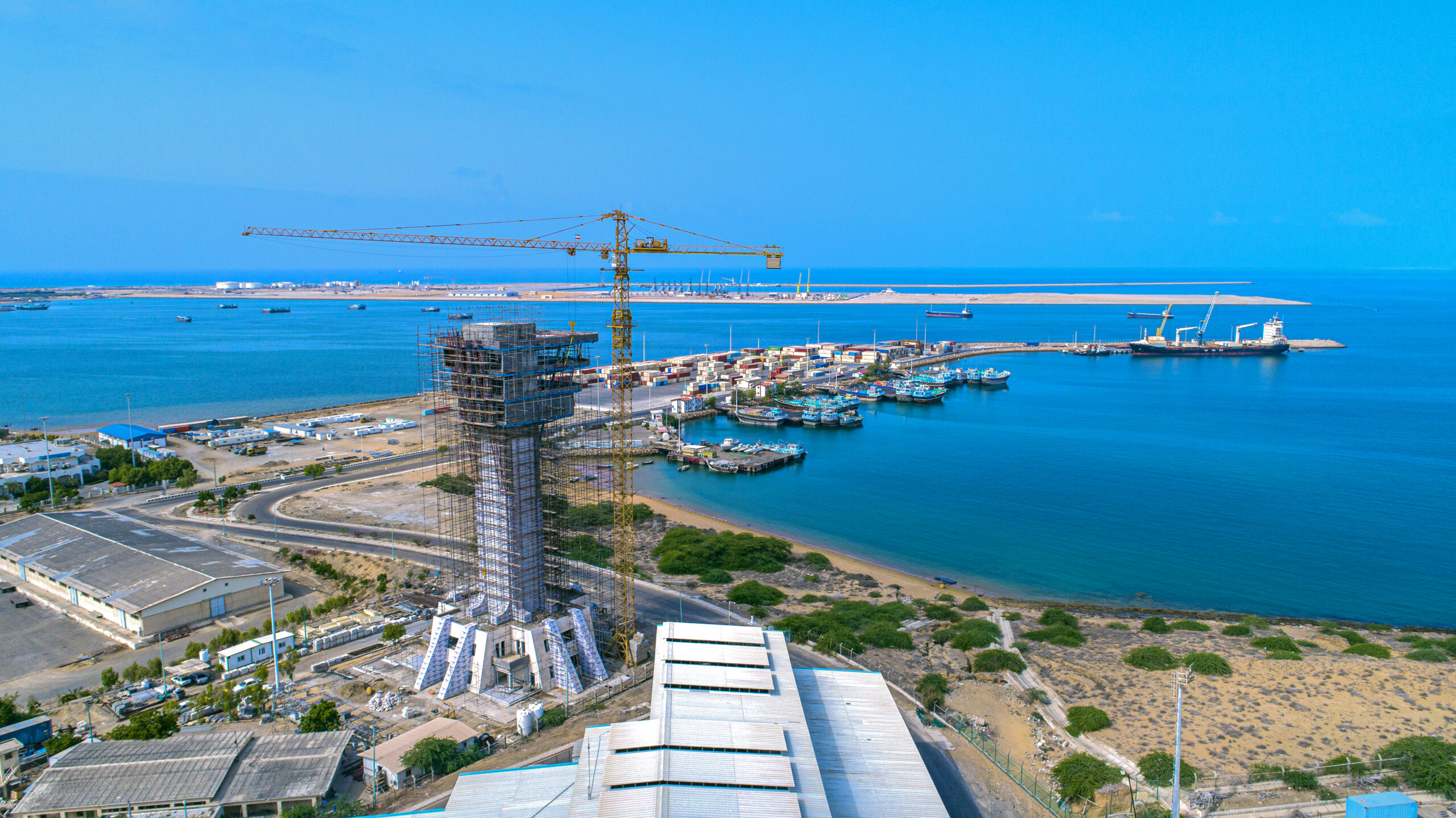
In a move that marks a tectonic shift in South Asian geopolitics, India has effectively liquidated its financial and operational exposure to Iran’s strategic Chabahar Port, which New Delhi saw as key route bypassing Pakistan to broaden its outreach and regional interests.
The decision comes as New Delhi grapples with a high-stakes “cost-benefit analysis” triggered by a fresh ultimatum from the Trump administration.
On Friday, reports emerged that India has transferred approximately $120 million to Tehran—the full remaining balance of its committed investment—to settle all financial liabilities.
By “liquidating” its stakes, New Delhi aims to sever direct ties between the Indian government and the project, leaving Iran free to use the funds independently.
🧵 THE CHABAHAR COLLAPSE:
A GEOPOLITICAL EARTHQUAKE FOR UPSC 2026 🌍💥
Attention: UPSC Civil Services Aspirants 2026 🚨
The unthinkable has happened.
India’s strategic “Golden Gate” to Central Asia—Chabahar Port—is witnessing a terminal exit.
This isn’t just news; it is a… pic.twitter.com/j8pxuu9bSZ
— Raj Malhotra (@Rajmalhotrachd) January 16, 2026
The retreat was punctuated by the mass resignation of government directors from India Ports Global Ltd (IPGL), the state-owned entity managing the terminal.
In a symbolic move to shield personnel from potential U.S. “secondary sanctions,” the IPGL website was taken offline earlier this week.
The catalyst for this sudden withdrawal was U.S. President Donald Trump’s January 12, 2026, announcement. The order, described as “final and conclusive,” imposes a 25% tariff on all business done with the U.S. by any country maintaining trade relations with Iran.
For India, the math was brutal:
Total duties on Indian exports to the U.S. could have soared to 75% when combined with existing punitive tariffs.
India’s Chabahar port exit is a calculated move, not a setback
With US sanctions risk, Iran war fears, and trade at stake, Delhi chose $190B US trade over a vulnerable चाबहार पोर्ट.
$120M paid, no assets stuck, tariffs avoidedSometimes geopolitics demands cold, timely exits. pic.twitter.com/vos2TR5otU
— RX (@TheReal_RX) January 16, 2026
India-Iran trade stands at roughly $1.68 billion (0.15% of India’s total trade), whereas trade with the U.S. is a cornerstone of India’s goal to become a $10 trillion economy.
Protecting a strategic gateway was deemed less critical than preserving access to the American market.
Since 2003, Chabahar has been the crown jewel of India’s regional strategy. Its importance was defined by three key pillars:
Bypassing Pakistan: It provided the only viable transit route for Indian goods to reach landlocked Afghanistan and Central Asia.

The INSTC Hub: The port is a central node in the International North-South Transport Corridor, a 7,200-km network linking the Indian Ocean to Europe via Russia.
Trade Security: Located outside the volatile Strait of Hormuz, it offered a “safe” deep-sea port for Indian energy and commercial interests.
Despite the liquidation, the Ministry of External Affairs (MEA) is attempting to maintain a diplomatic balance.
Spokesperson Randhir Jaiswal confirmed on Friday that India remains engaged with Washington regarding a conditional sanctions waiver that expires on April 26, 2026.
“We are working out this arrangement with the U.S. side,” Jaiswal stated, noting that New Delhi is exploring the creation of a “new entity” to manage the port—a move intended to continue support for the project without direct government liability.
Analysts warn that India’s “pragmatic” retreat may carry long-term costs. The withdrawal creates a strategic vacuum in the Sistan-Balochistan province that China—unfazed by U.S. sanctions and possessing “deeper pockets”—is well-positioned to fill.
Furthermore, the rise of the Taliban in Afghanistan has already diminished the port’s primary utility as a gateway for humanitarian aid. With internal unrest currently roiling Iran, the “strategic returns” on Chabahar appeared increasingly fragile to Indian policymakers.
While the overall trade volume is small, specific sectors face immediate turmoil. Basmati rice exporters, for whom Iran is the largest market, are bracing for payment delays and shipment cancellations as banking channels tighten under the renewed pressure.
As the April 26 deadline looms, New Delhi’s pivot suggests that in the era of “America First” trade policies, even the most cherished regional ambitions can be sacrificed at the altar of economic security.

Kiran Asim is a writer who covers the U.S., Europe, South Asia, and the Middle East. Her reports and analyses look at the geostrategic issues and contemporary developments and their economic and political implications. She also writes about society and education.