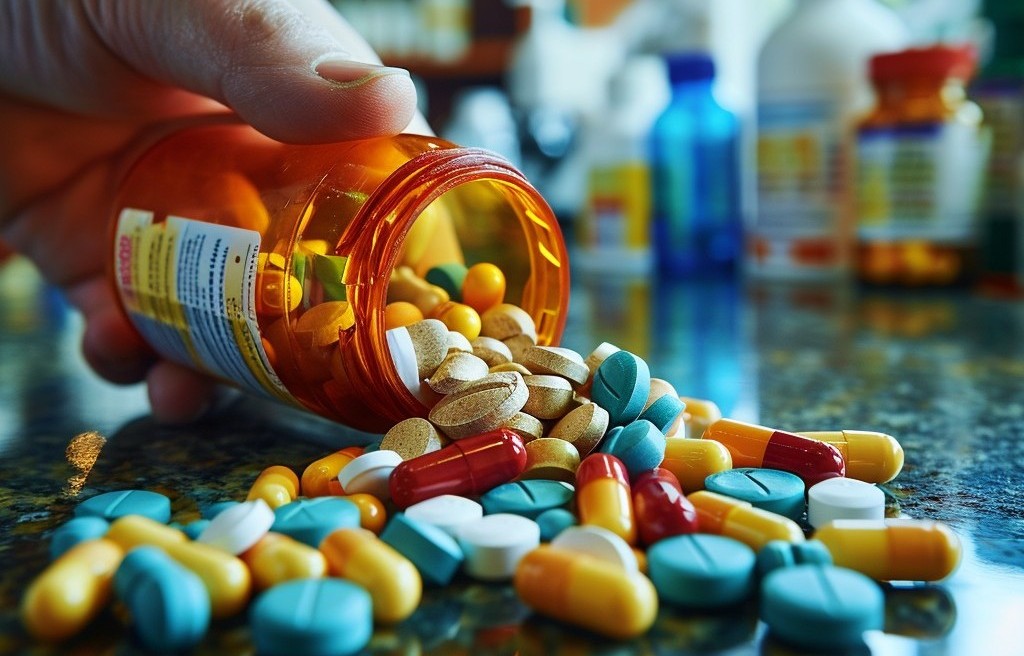
President Donald Trump has threatened to levy a 100% tariff on all brand-name or patented pharmaceutical imports tariff starting October 1—unless manufacturers set up production facilities within the United States. US tariff
The U.S. relies heavily on pharmaceutical imports, sourcing most from Ireland, followed by Switzerland and Germany. Other key suppliers include Singapore, India, Belgium, Italy, China, the UK, and Japan.
Indian drugmakers, who account for nearly 40% of pharmaceutical imports into the U.S., are expected to be among the most affected. Reacting to the news, Raghav Chadha, a member of the Rajya Sabha (India’s Upper House of Parliament), described the move as “a jolt” for the sector.
“India must turn this challenge into an opportunity by deepening alliances with other countries, co-developing medicines, sharing technology, and creating pooled procurement deals,” Chadha said on the social media platform X (formerly Twitter).
“By leading in affordable healthcare, India can secure new markets while reinforcing its role as a trusted partner in public health.”
‘We must FIX India, Brazil, Switzerland…’ — Trump’s commerce sec
Will the world like getting treated like a leaky faucet at the billionaire’s house? pic.twitter.com/UFCYMSMO6w
— RT (@RT_com) September 28, 2025
Indian pharmaceutical stocks dropped sharply following the announcement, despite the fact that most Indian exports to the U.S. consist of generic drugs, which are currently exempt from the new tariffs. Shares of Sun Pharmaceutical Industries fell 2.5%, while Divi’s Laboratories declined 3.5%. The broader Nifty Pharma Index slid over 2%.
Global drugmakers are taking the tariff threat seriously, with many accelerating plans to expand manufacturing in the U.S. Eli Lilly, for example, announced this week a $6.5 billion plant in Houston—just days after committing to a $5 billion facility near Richmond, Virginia.
The White House clarified that companies already in the process of building U.S. facilities will be exempt from tariffs on those specific products until construction is completed. This exemption applies only to projects initiated prior to the Trump administration.
Some industry analysts downplayed the long-term impact, noting that many large pharmaceutical companies already have U.S. manufacturing operations underway.
Still, experts warn that the new policy is unlikely to significantly reduce America’s dependency on foreign sources for essential drugs and active pharmaceutical ingredients (APIs), given the globalized nature of the supply chain.
Notably, generic pharmaceutical imports remain untaxed—at least for now. Analysts warn that extending the tariff to generics could deepen existing drug shortages. With already thin margins, many generic drugmakers may be unable to absorb the added costs and could exit the U.S. market.
India’s pharmaceutical industry appears relatively insulated for now. According to Namit Joshi, chairman of the Pharmaceutical Export Promotion Council of India, the new tariffs are “unlikely to have an immediate impact” as most large Indian firms already operate U.S.-based manufacturing or repackaging units and are pursuing further expansion.
The tariff move is also unlikely to benefit regional competitors. For example, Pakistan’s pharmaceutical industry remains excluded from the U.S. market due to regulatory hurdles.
“None of Pakistan’s standard pharmaceutical products are approved by the U.S. Food and Drug Administration (FDA). So, restrictions on Indian pharma products cannot help Pakistan increase its access to the U.S. market,” said Amjad Ali Jawa, former chairman of the Pakistan Pharmaceutical Manufacturers Association, in an interview with Views and News.
However, Jawa added that Pakistan could explore exporting herbal and homeopathic medicines to meet rising global demand.
Follow for more: Twitter (X) | Facebook | Instagram | LinkeIn

Muhammad Luqman is Associate Editor at Views News Now. He writes on wide-ranging issues including economy, South Asia, the Middle East, agriculture, economy and innovation. Luqman has worked some of the leading news organizations and won acclaim for his original and research-based works.