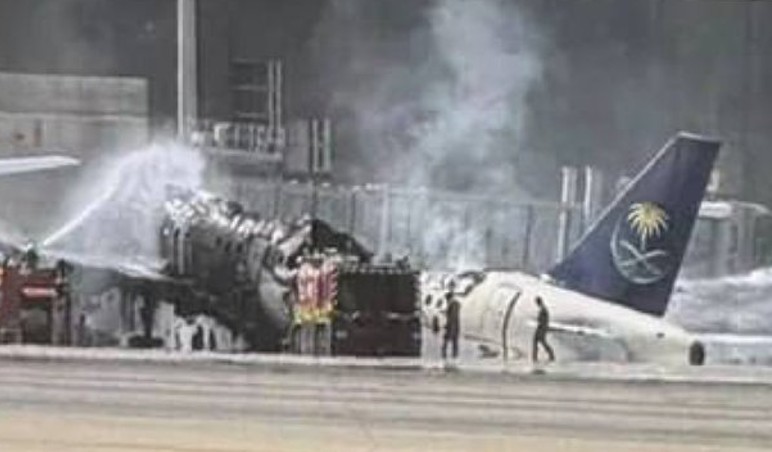
Riyadh’s main international airport has become a repeated target in the escalating conflict with Yemen’s Houthi rebels. Over the past week, four separate attacks hit the facility and surrounding areas, leaving at least 18 people dead and more than 300 wounded.
What stands out is not only the scale of the violence but the absence of any public alert from Saudi authorities in the days leading up to those strikes.
A Warning System That Went Quiet
Saudi Arabia launched a national early-warning system in May. It sent notifications of potential military threats directly to mobile phones and social media accounts. The system was designed to give residents time to take cover.
Yet the last military-related alert before last week’s attacks came on September 29, directed at the southern province of Najran, according to posts on the civil defense authority’s X account.
Despite a clear rise in Houthi activity, the alerts stopped. Civil defense continued to issue routine weather warnings about rain and flooding, including as recently as Monday. It also reminded residents not to share images, rumors, or details about interceptions and impact sites, citing regulations introduced in March. On Monday the authority finally resumed threat alerts warning of potential danger in Riyadh and southern cities. Reuters could not confirm whether the restart was a direct response to the airport attacks. The Saudi government media office and civil defense did not respond to questions about the pause.
Questions of Vulnerability and Image
The silence has raised practical concerns about how well the kingdom can protect its own people and the many foreign visitors and workers who live there. Four Western and Arab officials in the region, along with political analysts, told Reuters that the lack of warnings highlighted Saudi Arabia’s exposure to attack. At the same time, they said it reflected a deliberate effort to preserve a sense of normalcy.
“They (the Saudi government) want to have it both ways: to launch a military operation and at the same time try to give confidence to the population and external stakeholders,” said Sultan Alamer, a U.S.-based Saudi academic and senior resident fellow at the Middle East Policy Council.
Former U.S. ambassador to Saudi Arabia Michael Ratney put it more bluntly. Riyadh is trying to balance the need to respond to Houthi attacks with a desire to avoid disrupting daily life. “Their approach to public messaging seems like a corollary to the quandary they are in,” he said. “But the lack of alerts of incoming Houthi attacks creates the very nervousness they are trying to avoid.”
What Officials Were Told Behind Closed Doors
Before the airport strikes, officials from an allied Western government asked Saudi authorities why the public alerts had stopped, according to two people with direct knowledge of the exchange.
The reported answer was that the alerts were too disruptive and that many citizens had complained about being woken up at night. The Saudi government media office and officials did not respond to requests for comment on that account.
Other Gulf states have taken a more consistent approach. Qatar’s interior ministry has issued mobile-phone alerts before nearly every recent attack, telling residents to stay inside and away from windows. Bahrain and Kuwait have repeatedly sounded sirens urging people to take shelter. Saudi Arabia’s decision to go quiet stands out against that regional pattern.
Broader Context of the Attacks
Houthi forces have repeatedly warned civilians and foreign companies to stay away from Saudi oil facilities and airports.
The Saudi-led coalition has reported intercepting threats in recent days, including the destruction of three drones north of Riyadh and the interception of a Houthi ballistic missile over the capital. Meanwhile, Israeli media reported that Saudi Arabia rejected an Israeli offer, conveyed through U.S. mediation, to join military operations against the Houthis.
Crown Prince Mohammed bin Salman is said to have turned down the proposal, concerned about domestic reaction and the kingdom’s longstanding position that any normalization with Israel depends on progress on the Palestinian issue. Saudi authorities have not publicly confirmed the report.
The Risk of the Quiet Approach
Saudi Arabia continues to fight a complex war while trying to project stability to investors, tourists, and its own population.
The early-warning system was meant to manage risk. Its temporary shutdown, followed by deadly strikes with no public notice, has left residents and observers wondering how that balance is being struck.
The government has not offered an official explanation. Until it does, the silence itself has become part of the story.

Kiran Asim is a writer who covers the U.S., Europe, South Asia, and the Middle East. Her reports and analyses look at the geostrategic issues and contemporary developments and their economic and political implications. She also writes about society and education.