The world’s diplomatic focus this week may have been on the UN General Assembly, where leaders set out their views on some of the key issues confronting the international community. But perhaps the most consequential diplomatic engagement was taking place elsewhere, as President Xi Jinping met President Donald Trump in what could prove an important moment in U.S.-China relations.
Half a century after establishing diplomatic relations, the United States and China are the world’s two largest economies and most powerful countries. But what about the country that helped bring the two together during the Cold War?
Pakistan, which hosted the famous shuttle diplomacy between Washington and Beijing in the early 1970s, is today a vulnerable economy, lagging behind key development benchmarks.
Yet the South Asian country continues to play an outsized role in international affairs—most recently through its role as a key intermediary in U.S.-Iran talks aimed at ending the conflict.

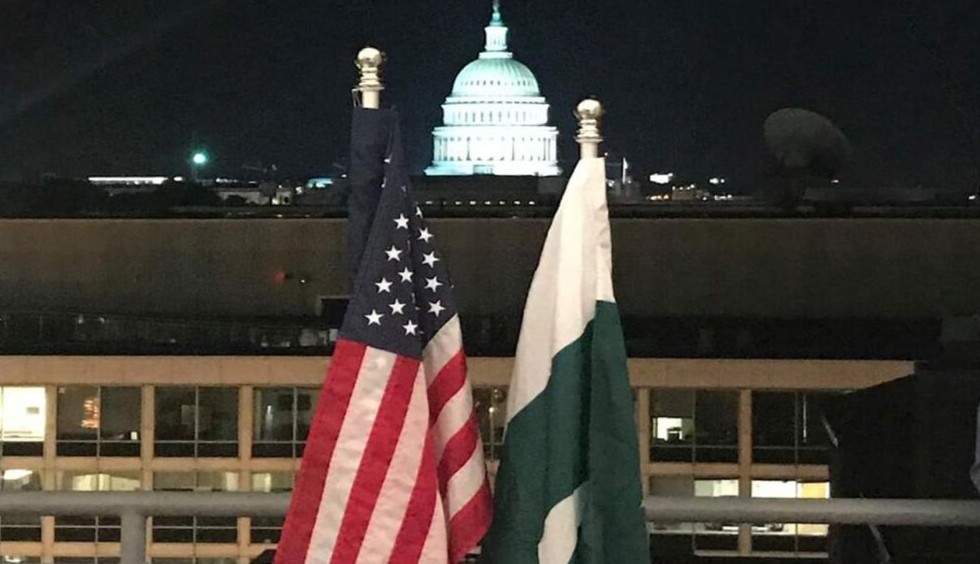
Pakistan also occupies an unusual strategic position. It maintains close relations with the United States, a longtime defense and trading partner, while at the same time enjoying a close strategic relationship with neighboring China. It is also a nuclear power whose strategic significance extends to some of the world’s wealthiest Gulf states, including Saudi Arabia.
So, whenever Pakistan’s international relations come under scrutiny, a larger question inevitably arises: what is in store for Pakistan’s relations with the United States, particularly at a time when its rival India is making rapid economic strides?
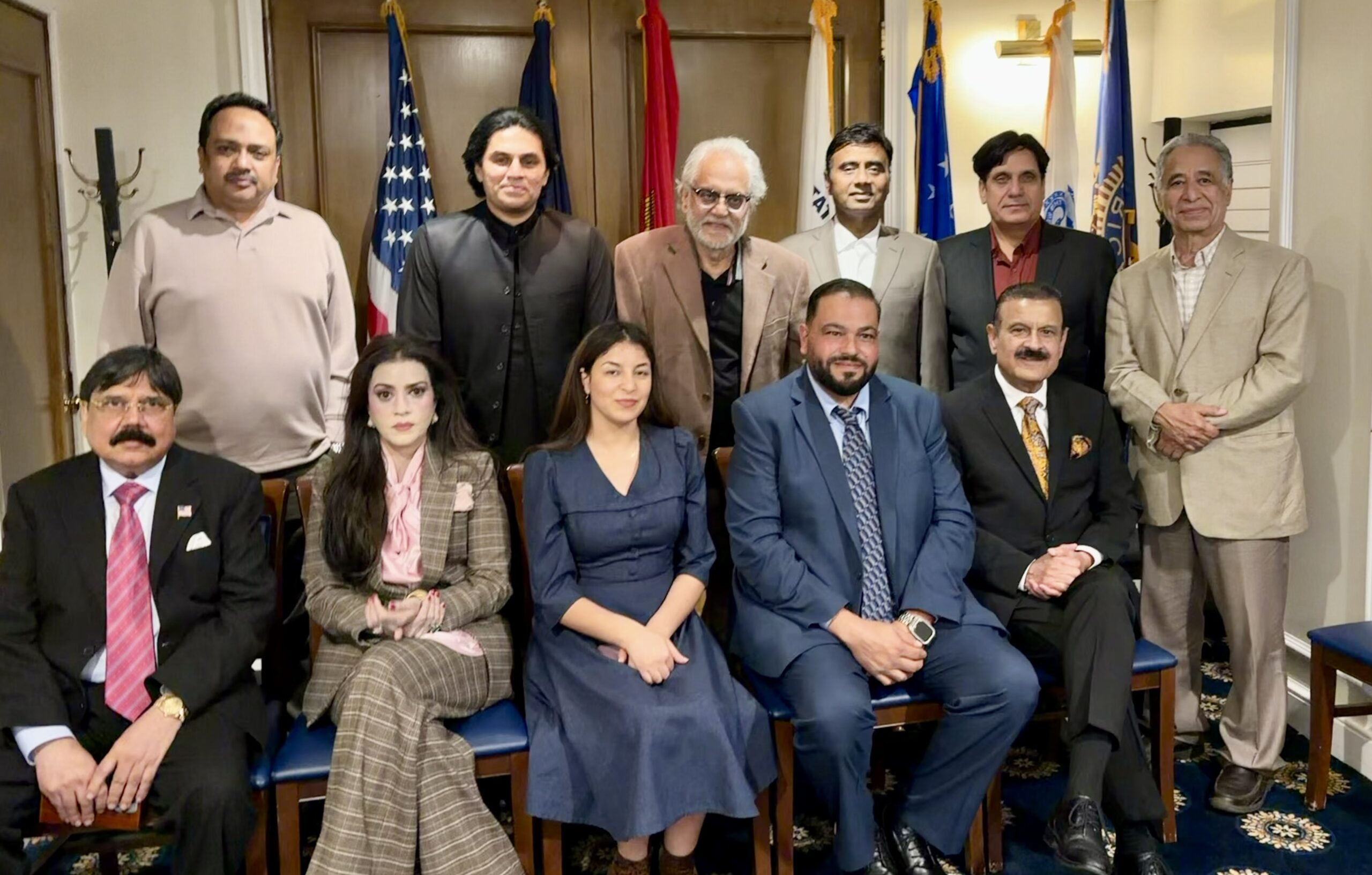
That question took on added significance at an event this week where Pakistani Americans and experts discussed the future of U.S.-Pakistan relations and the role of the Pakistani American community in that relationship.
The consensus was striking. Given the strategic interests the two countries share, it seems difficult to explain why Washington and Islamabad should not have a much closer and more sustained relationship—one that produces tangible benefits for both countries.
The fact that this question remains so prominent is itself a reflection of the history of the relationship.
The discussion, hosted by Muslim American Leadership Alliance Chairwoman Maha Khan around Barrister Dawood Ghaznavi’s book A Global Asset Reborn, which explores the Pakistani diaspora’s soft-power influence, offered a useful lens through which to examine that history as well as the possibilities for the future.

For much of the past quarter-century, the relationship between the United States and Pakistan has followed a familiar pattern: periods of intense cooperation followed by disappointment, mistrust and strategic distance.
In 2026, the two countries appear to be entering another period of closer engagement. But whether this develops into a more institutionalized strategic partnership or becomes another transactional phase remains an open question, particularly as President Donald Trump’s personalized approach to foreign policy shapes Washington’s international relationships.
Dr. Gholam Mujtaba, who heads the Pakistan Policy Institute, argued that history provides ample evidence of the enduring importance of U.S.-Pakistan cooperation.
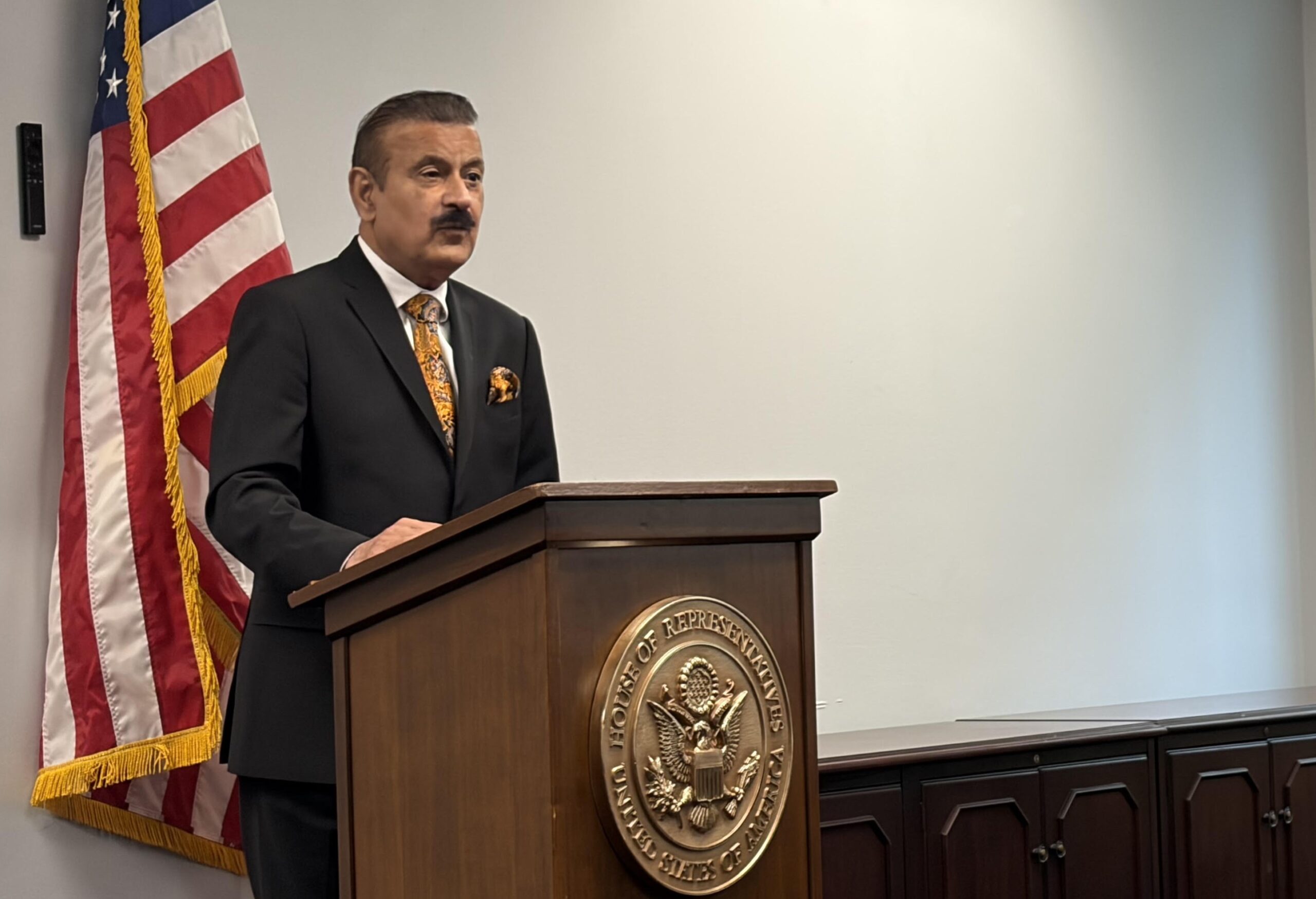
He pointed to a series of episodes—from Pakistan’s participation in U.S.-led alliances during the Cold War to the Soviet occupation of Afghanistan and the post-9/11 war against terrorist groups—as examples of periods when the interests of the two countries converged.
Mujtaba argued that Pakistan played an important role in the U.S. effort during the final chapter of the Cold War. He similarly pointed to Islamabad’s cooperation with Washington in counterterrorism operations against al-Qaeda leaders in the Afghan border region.
“Even today, Pakistan has played an important role with mediation on U.S.-Iran conflict, and as the U.S. faces proxy wars, Pakistan stands with it. So, the two countries should have a very close relationship,” he said.

The argument for a closer relationship, however, is not limited to security.
Arif Mansuri, an entrepreneur and publisher of Pakistan Link newspaper, highlighted Pakistan’s economic and business potential as another important dimension of the relationship.
Mansuri, who was part of a Congressional delegation that recently visited Pakistan, said he came away optimistic about the country’s economic prospects.
“Pakistan is open for business,” he said, citing a member of the delegation.
That economic dimension could prove particularly important if Washington and Islamabad want to move beyond a relationship driven primarily by periodic geopolitical crises.
Journalist Anwar Iqbal, who has observed the ups and downs of U.S.-Pakistan relations over many years, offered a more measured perspective.
He suggested that the relationship needs to be approached with a degree of pragmatism.
“We should neither overestimate Pakistan’s potential nor underestimate it,” he said.
That may be one of the more important principles for the relationship going forward.
A sustainable partnership would require Washington to recognize Pakistan’s strategic and economic potential without expecting Islamabad to become an extension of American policy in the region. Pakistan, for its part, would need to demonstrate that it can translate its strategic importance into economic opportunity, institutional reliability and policies capable of attracting long-term investment.
The role of the Pakistani American community could form another part of that equation.
Maha Khan spoke about the importance of Ghaznavi’s book and the work of the Muslim American Leadership Alliance in raising awareness of Muslim Americans’ participation in American society and national life.
Ghaznavi, the author, explained why he felt compelled to write about the Pakistani diaspora.
“U.S. Congressional leaders follow the relationship, and have a strong opinion about Pakistan,” he said, referring to statements by Congressman Joe Wilson.
“Pakistanis in the U.S. are a distinct diaspora, and in the coming years they are going to be very effective and influential. What needs to be seen is how both countries engage economically as well.”
That last point may ultimately be crucial.
The future of U.S.-Pakistan relations is unlikely to be determined by strategic considerations alone. Pakistan’s geopolitical importance can create opportunities, but the durability of the relationship will depend on whether those opportunities can be converted into deeper economic, institutional and people-to-people connections.
Toward that end Pakistan needs to adopt policies that encourage investment and make the country more attractive to foreign capital—including investment from Pakistani Americans. The United States will also have to look at Pakistan not only through the lens of security and regional crises but also as a market, an economic partner and a community with growing links to American society.

Ali Imran is a Washington-based journalist, who has worked for leading world news organizations as a correspondent, expert and in editorial positions. He is a published author and poet.